World War I Tips
How World War I Changed Global Politics


World War I, which became known as the Great War, was not just a devastating war; it was a significant shift in world political history. World War I changed global politics did not only cause deaths on a scale measured in millions and economically decimated countries; it destroyed empires, changed the borders, and shifted the balance in world power. Four leading imperial dynasties, the Ottoman, Austro-Hungarian, Russian, and German empires all collapsed and left a gap-to-be-filled with novice nations and ideologies.
On the political front World War I changed global politics with the emergence of communism in Russia, spread of fascism in Europe, and the germs of modern democracy. It saw an emergence of the League of Nations, the early entrant into an international system of peacekeeping. The weakened by the war colonial powers started experiencing resistance in their territories abroad, which became the embryo of decolonization. It resulted in the U.S. becoming a world power and the redivision of the Middle East under the European mandates. The World War I rearranged world politics with its foundation.
Collapse of Empires and Rise of Nation-States
There were four big empires that broke up due to World War I, and they were Austro-Hungarian, Ottoman, Russian and German. Their break contributed to radical changes in power and formation of new nation states. The ethnic or cultural realities played no part in the redrawing of borders, but were established on the political agreements that would seed future conflicts. Stability, identity, and governance was usually a challenge to these newly formed nations. It also spurred the world toward self-determination, nationalism, and independence which in turn transformed the political map of the 20th century and further changed the geo-politics of the world.
Fall of the Austro-Hungarian Empire
The Austro-Hungarian Empire was a complex monarchy of numerous ethnicities which fell at the close of World War I. Its conquest brought about the political acceptance and the formation of countries such as Czechoslovakia and Yugoslavia. Austria and Hungary were lands that became independent and other lands were annexed by neighboring countries. The unresolved tensions and ethnic division in this region would later manifest itself in the future conflicts particularly in the late 20th century.
End of the Ottoman Empire
After World War I, the Ottoman Empire unofficially ceased to exist and was dismantled officially in 1920s. The huge territories in the Middle East under its control were partitioned between the British and French mandates, ignoring both ethnic and religious complexities. European interests had defined artificial countries and continual regional destabilisation by this redrawing of borders. The roots of this imperial winding down and the reorganization of territory during and after World War Two run deep into the politics of the contemporary Middle East.
Russian Revolution and Civil War
The historic world war I contributed to the internal crisis in Russia as it led to the Bolshevik revolution in 1917. The Tsarist regime was held by military defeat, hunger and economic tension. Bloody civil war ensued and culminated with the takeover of Bolsheviks and creation of the Soviet Union – the very first communist state in the world. This revolution did not only change the politics of Russia but also opened up the large ideological struggle throughout the world and this precipitated the future cold war hostilities.
German Monarchy Overthrown
On losing WWI, Germany suffered a lot. The end to the centuries of imperial rule was set when Kaiser Wilhelm II abdicated in the year 1918. In its place, the Weimar Republic emerged with democracy at a period of financial catastrophes and national embarrassments. The Weimar government was a well-meaning one that failed to overcome the issues of hyperinflation, political extremism and distrust of the government by the people which eventually saw the arrival of Adolf Hitler and the Nazi rise to power.
Birth of New Nations
The fall of the empires has changed into the creation (or rather reconstruction) of individual nations, Poland, Finland, Estonia, Latvia, and Lithuania, etc. Most of these nations were oppressed through centuries and they had to establish modern governments. Loyalty to the nation ran high only to increase the territorial disputes and ethnic tensions. Their fragile independence was once more put to the test with World War II, but their advent was a climax in global self-rule.
Rise of New Ideologies and Extremism
The succession of World War I established a fertile soil of radical political ideologies. With the breakdown of economies, the disillusionment and the shambles in political circles liberal democracy had no more credibility in most nations. Consequently, there was a rampant form of extremism. World War I changed global politics when communism was established in Russia and served as a source of inspiration to revolutions all over the world, and fascism flourished in Italy and Germany, heralding peace and rejuvenation of the nations. The resentment and polarisation grew because of the devastation caused by the war and the Versailles treaty , another way in which World War I changed global politics. This made international relations unstable and created the preconditions of further fights, such as the emergence of the totalitarian regimes and the beginning of the Second World War.
Spread of Communism
Communism is now a force of reckoning in the world after the Bolshevik Revolution in Russia. The capitalist countries were threatened by the Soviet Union which assisted in the socialist rebellions in Europe and Asia. Workers and intelligentsia all around the world were motivated by the catchcry of parity and anti-imperialism. But it also had other side effects in the form of repression and reactionary politics in the West and in third world countries trying to resist Soviet influence.
Fascism in Italy
The postwar country was in shambles; the national pride was destroyed. Benito Mussolini capitalized on the anger and fear of the masses and he offered them stability, strength and restored greatness. In 1922, he established the initial fascist government and broke down democratic institutions and encouraged aggressive nationalism. The events that led to the rise of Mussolini inspired other non-democratic forces in Europe, and it demonstrated how populism and militarism could be used to supersede democracy in case of a crisis and disillusionment.
Nazism Emerges in Germany
The surrender of Germany and humiliating conditions of the Versailles Treaty gave rise to resentment. The influence of extremist ideologies was developed on the ground of economic collapse, joblessness and humiliation. Germany was affected by these circumstances and they were used by Adolf Hitler and the Nazi Party as they cast blame on the Jews, communists, and the Allies. With the vow of renewal and vengeance, Nazism grew so fast until it could ultimately possess total power and provoke the implementation of policies that would result to global war and genocide.
Decline of Liberalism
It is now shown that it is postwar instability that revealed the frailties of liberal democracies. Coalition governments successfully coped with crises rather rarely, and this disappointed the population. Authoritarianism started to be viewed by many as the only solution to political stagnancy. In Europe, voters drove towards the far sides, left, and right, forcing out moderate parties. The world witnessed the reshaping of political forces as liberal ideas of personal freedoms and free markets were eroded with demands of state regulation and national solidarity.
Anti-Colonial Movements Grow
World war I saw imperial soldiers that had been involved in the war challenge the imperial authority upon returning to their countries. Independence movements were strengthened by the ideas of self-determination and anti-imperialism in Asia, Africa, and the Middle East. Even such leaders as Gandhi and Ho Chi Minh were also driven by the inconsistencies of the war where on one side people were struggling to gain freedom with the other side denying them such freedom. Such postwar impetus triggered several decades of struggles and became the precursor of worldwide decolonization.
Redrawing of Global Borders
Peace treaties made after World War I restructured the boundaries of the world radically. Treaty of Versailles and other treaties redrew national boundaries in Europe, the Middle East, and Asia. New states came up though most borders did not take into account ethnic or cultural facts. Unjust proceedings have caused tensions, the moving of communities, and a conflict in the future. The origin of colonial mandates in the Middle East destroyed the self-determination of the sovereign state which was replaced by Ottoman rule. These are the changes on the maps implying interests of the victors rather than long-lasting peace. With the disappearance of old empires, the new political geography was converted into a decade of misery and geopolitical unrest.
Treaty of Versailles
The Treaty of Versailles had contained unreasonably stiff terms against Germany in that Germany was fined, Germany lost territory as well as permits to be involved in military activities and was restricted. Such an approach to the treaty bred resentment among the German people who led to the economic crisis and political extremism. It was viewed as the national humiliation of many Germans and this resentment would be tapped into by Adolf Hitler when he enlisted these sentiments in support of revanchist policies and militarization.
Mandate System in the Middle East
When the Ottoman Empire finally collapsed, the League of Nations awarded mandates to Britain and France over such countries such as Iraq, Palestine and Syria. These commands disregarded the local desires and imposed western-style authority on various groups. The outcome of this was the continuing political trouble and unrest especially in regions such as Palestine where policy on colonialism formed the basis of post colonial wars and regional instability.
Balkan Reconfigurations
The war led to some significant territorial rearrangements in the Balkans. The establishment of Yugoslavia joined various groups of Slavs, nevertheless, ethnic, religious, and historical differences continued. The lack of consensus on drawing boundaries resulted in internal rivalry and struggle to have supremacy. This tension was never resolved and went on to cause instability in the region later resulting in violent conflicts in the late 20th century when Yugoslavia broke apart.
Rebirth of Poland
Poland came back to the map following more than a hundred years of division between Russia, Prussia, and Austria. The Treaty of Versailles gave it official status as an independent state but the borders were disputed. Poland was now in contrast with its neighbors such as the Soviet Union. In spite of initial difficulties, the re-establishment of the nation was an effective symbol of the post-imperial national revival in Eastern Europe and it had a significant place in interwar politics.
Asia-Pacific Adjustments
Japan, one of the WWI victors, extended its imperial presence by taking over the German territories in China and the Pacific. Its territorial dominance in Shandong and Pacific islands altered the regional power equilibrium. The Japanese were resentful when their suggestions of equal racial treatment were rejected by the Western allies at the same time they were expecting to be appreciated because of their part in the war. Such tensions persuaded the future militarism of Japan and its renouncing the Western diplomacy in the 1930s.
Emergence of the United States as a Global Power
The involvement of World War I made the United States take its place on the world map as one of the dominant powers of the world in terms of economy and diplomacy. It was an entrant to the war much later and thus relative power against France tipped the balance of the war. Following the war the U.S enjoyed the status of the largest world economy and provider of credit. Though it did not become a member of the League of Nations instead, American ideologies and economic power took part in reconstructing the postwar order. The war was a turning point at which U.S. leaderships and values started to influence global politics and the old European domination in world affairs was faded.
Economic Powerhouse
The U.S. economy boomed in the course of World War I as arms, foodstuff, and materials were provided to the allies. At the end of the war, it would become the world industrial and financial leader replacing Europe. It also started to be a major creditor, and the European countries were in debt to the American banks. The new economic power meant that the U.S. can influence international affairs and this formed the basis of American global dominance towards the 20 th century.
Military Influence Expands
U.S involved itself in the war in 1917 made its mark. Allied forces were rejuvenated by American soldiers and other forces and the balance was tilted. The war showed that American military intervention could play a defining role in international warfare. This became a precedent of the American interventions overseas in the future and opened a new era of American role as a world peacekeeper and strategic military force in the 20 th century.
Wilson’s Fourteen Points
The Fourteen points by President Woods Wilson was a vision of a just and permanent peace. It advocated self-determination, open diplomacy and free trade in order to prohibit future wars. Although the Versailles Treaty took into consideration hardly any of the ideas outlined, Wilson addressed the whole world in his speech which inspired many. His idealistic scenario had an impact on international discourse and contributed to the development of the new principles in international governance and diplomacy.
Isolationism Returns
In spite of its military success, the U.S. saw a course of poor international participation post 1918. The Senate also voted not to join the League of Nations; the country turned back to isolationism. Americans were cautious of the entangling alliances and foreign war. This disengagement with global leadership caused American participation in world affairs to be late until World War II when its economy and culture were still gaining strength.
Cultural and Diplomatic Leadership
Influence on postwar culture and diplomacy The U.S. influenced the postwar culture and diplomacy even not being directly involved in politics. American music, film and consumer products are sold around the world. Democracy and capitalism became an attractive idea in most countries. The American universities hosted the international students, and the American thrives helped in reconstruction. These non-military forces started in effect transferring global leadership that used to be European to a more American led international system.
Creation and Failure of the League of Nations
The League of Nations was established as a follow-up to World War 1 so as to enhance peace and to avoid the occurrence of wars in the future. It was the initial significant move regarding international collaboration in the institutionalization of diplomacy and collective energies. But its effectiveness was contradicted by structural weaknesses, its inability to take action as well as the absence of big players such as the United States. In the 1930s, the League had failed to respond to aggression, finally leading to the prevention of World War II. It was in spite of its existing shortcomings that it served as a model base to the future international organizations, especially the United Nations.
League’s Purpose and Structure
The League of Nations aimed at preventing war with the help of diplomacy, arbitrations and economic sanctions. Member countries vowed to solve disputes amicably and in support of group decisions. It possessed a Secretariat, an Assembly, and a Council but it was not endowed with real powers. Although such a comprehensive undertaking as the League of Nations, its voluntary nature forced the League to be ineffective in its effect, particularly when confronted by the increasing nationalism and militarism between the war years.
U.S. Refusal to Join
The U.S. never became a member of the League even though the League was proposed by President Wilson in his Fourteen Points. The senate declined membership since it suspected that the membership would drag America in future wars. When the United States did not participate, the League did not exercise authority and unity in the world. This loss of one of the upcoming powers in the world dented its legitimacy and handicapped it to enforce peace by not being very useful in resolving international disputes.
Weak Enforcement Power
The League lacked any military forces and actual enforcement mechanisms of its resolutions. Member countries were to take steps or impose sanctions at their eigen, which they were not always willing to do. This restriction enabled powerful countries to engage in breach of international agreements without any significant repercussions. Its incapability to demand action during times of crisis brought to light the vulnerability of collective security which depends on its voluntary cooperation.
Failure in Manchuria and Abyssinia
The invasion of Manchuria by Japan and Abyssinia (Ethiopia) by Italy took us back to the 1930s. Such acts were denounced by the League, without substantively acting against them. The sanctions imposed on them were paltry and there was no military intervention. Such failures proved the inefficiency of the League and gave more strength to the aggression of Nazi Germany. Its failure to take action decisively became an indicator that it was losing grip with international politics.
Legacy and Lessons Learned
Nevertheless, due to its failures, the League of Nations presented the idea of global governance. It brought attention to the necessity to enhance international collaboration and the means of its enforcement more seriously. The experiences of its failure guided the establishment of the United Nations in 1945 consisting of expanded membership, strengthened institutional frameworks and involvement of the key powers around the globe. The legacy of the League is important to the study of contemporary diplomacy.
Conclusion:
World War I was a geopolitical earthquake which redefined the establishment of international relations. World War I changed global Politics as destroyed empires, re-divided borders, created new ideologies and changed power balance. The fall of monarchies created new states and battling political regimes- liberal democracy, communism and fascism. The postwar situation also proved how weak peace is and what punitive diplomacy can lead to. Although the League of Nations was a failure, it brought the concept of international collaboration that resulted in the formation of the United Nations, another way in which World War I changed global politics.
The war also sped up the development of America into a world power and paved the way to decolonization movements in later years , showing again how World War I changed global politics. It had a political legacy that led to World War II and the Cold War. Lots of modern things, such as alliances, ideologies, and the global institutions of the world can be traced back to the conflict. The knowledge of how World War I changed global politics the field of politics also enables us to understand the present difficult international environment better.
Learn the experiences of World War I and turn this into an insight to help us live in a truly global environment today. Give your thoughts on how our world was formed through diplomacy, ideology and power games. Promote international collaboration and knowledgeable policymaking to avoid any future conflicts. It does not always repeat history but it tends to rhyme. Just remain conscious, remain connected and create the future without being irresponsible.
FAQs
1. What were the impacts of World War I on the world power arrangements?
It destroyed empires and formed new countries, and redirected powers to the U.S. and the Soviet Union, establishing a new world order.
2. What were political ideologies in the post WWI?
Russia saw the cultivation of communism, fascism became dominant in Italy and Germany and people in liberal democracies found it hard to live due to economic and social conflicts.
3. What was the cause of failures by the League of Nations?
It had no enforcement authority, its important members such as the U.S. did not participate in it, and it could not stop aggressions that caused World War II.
4. What was the effect of WWI on the global involvement of the U.S?
The war also earned the U.S its debut on an international scene as a major economic and diplomatic power in the world though the U.S reverted into isolationism after WWI.
5. How did the treaty of Versailles impact international politics?
The treaty laid heavy burdens to Germany that created a feeling of resentment which contributed to the emergence of Nazism and World War II.
6. Was World War 1 a chink in the decolonization process?
Yes. European-led powers being weak and the inclusion of colonial soldiers in the war led to early anti-colonial movements in Asia, Africa and the Middle East.
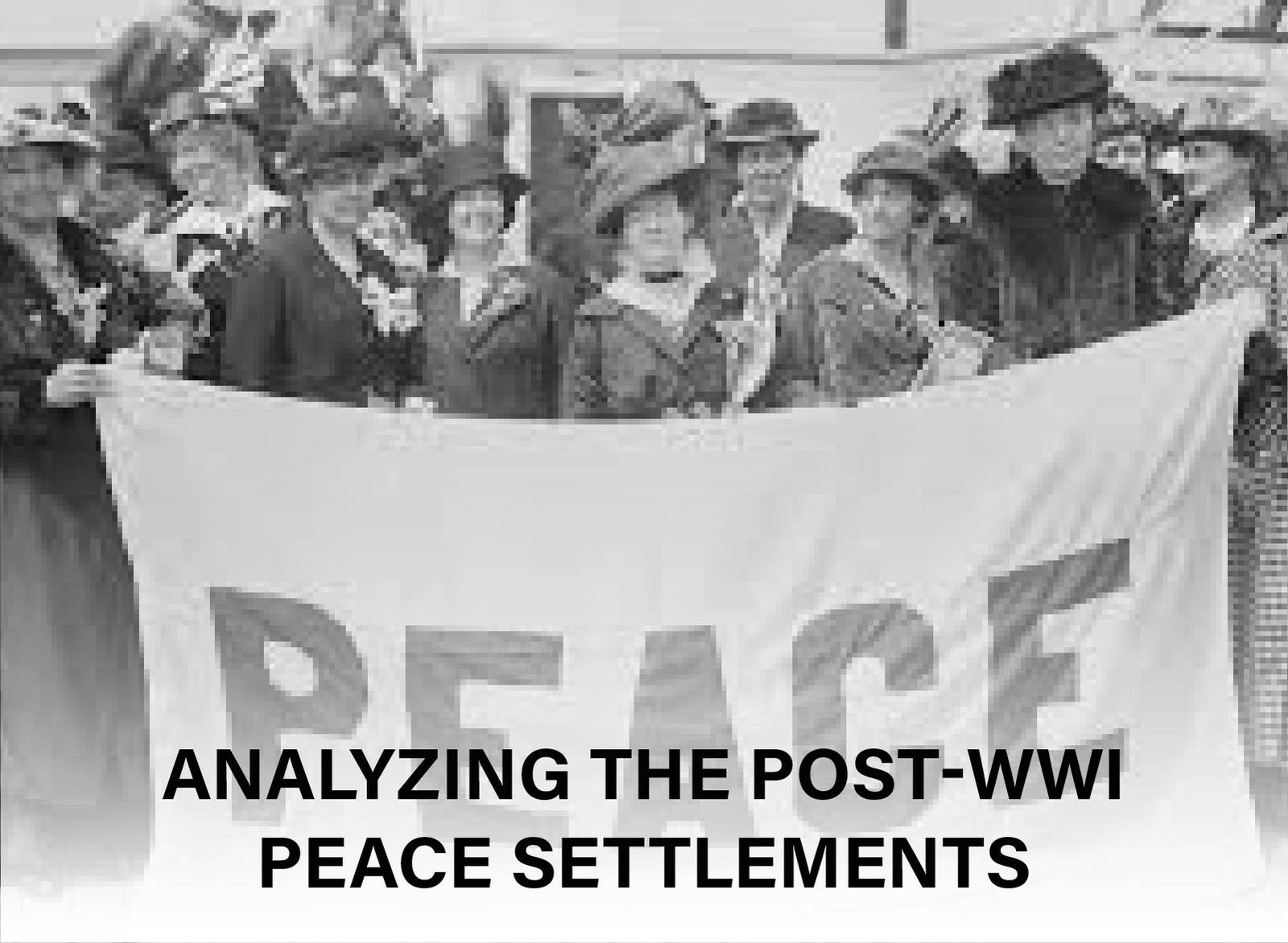
The peace settlements that followed the end of World War I redefined the world politics and economy. In the wake of the war destruction, the successful Allied Powers aimed at establishing the harmony and harmony was strived to realize with a set of treaties that dismantled empires, rearranged borders, and forced reparations. The best known, the Treaty of Versailles (1919) was aimed at Germany but there were also other agreements: the Treaties of Saint-Germain, Trianon, Neuilly, and Seves also covered Austria-Hungary, Bulgaria, and Ottoman Empire respectively. It is important to analyze these treaties to determine the instability that characterized most events during the 20th century.
Although the settlements were meant to stop any future wars, most scholars claim that they somewhat planted the genesis of World War II. New political borders and drastic reparation led even decades later to economic pressure and ethnic conflicts.
To learn more about such peace settlements, it will be necessary to analyze primary sources, records used by scholars, and analyses. Both kinds of sources can provide special information: treaties can show certain terms, whereas modern science analyzes their impact, trying to observe a long-run effect. Such a concession creates a fair approach and enables us to understand the intricacy of these settlements and draw lessons of subsequent peace-building activities.
Examine the Key Treaties and Their Terms
Treaties are the basis of the post WWI peace settlements. These treaties explained territorial rearranging, military limitations, and economic restitutions. The most attention is usually paid to the Treaty of Versailles which imposed harsh penalties on Germany. But the other treaties, including St. Germain and Trianon dissolved the empires and created new states. The study of the precise definitions can assist you to grasp the effects of these settlements on Europe and the Middle East. Official documents and maps, as the main sources, show us the vision and tradeoffs of every clause and the implications of the clauses on the nations they affected.
Treaty of Versailles
Dictated punitive reparations and territorial withdrawal to Germany resulting in adverse economic pressure in the long run.
- Restricted German military assets in order to eliminate further aggression and conflicts.
- Re-drew the European borders, assigning territory to France, Belgium and new countries.
- Established the League of Nations with the aim of promoting worldwide collaboration and desire for peace.
Treaty of Saint-Germain
Disbanded the Austro-Hungarian Empire and established new nations such as Austria and Czechoslovakia.
- Inflicted territorial defeats on Austria to Italy, Yugoslavia and Romania.
- Limited the military strength of Austria further undermining the influence of Austria in the region.
- Banned Austria to join Germany without the consent of the League of Nations.
Treaty of Trianon
Half of its economy and population were adversely influenced by reduced size of Hungary by 2/3 rds.
- Poland, Hungary, Romania, Czechoslovakia and Yugoslavia were given land, recreating Central Europe.
- Hungary left major Hungarian minorities beyond the new borders of Hungary causing tensions with it.
- Restricted Hungary to admit as its armed forces a mere defensive army.
Treaty of Neuilly
Compelled Bulgaria to relinquish land to Greece, Romania and Yugoslavia.
- Imposed on Bulgaria with military limitations and financial payment.
- Caused resentment among Bulgarians, who considered that treaty unfair.
- The shift in Balkan power politics leading to the current and long-standing instability.
Treaty of Sèvres
Collapsed the Ottoman Empire and partitioned it between Allies.
- Placed dangerous places such as the Dardanelles under international control.
- New countries that gained recognition but many of them failed to materialize with examples being Armenia and Kurdistan.
- The resultant nationalist opposition precipitated in the Treaty of Lausanne (1923), in Turkey.
Assess the Impact on Affected Nations
The European and Middle East was restructured dramatically after the peace settlements that were made following Post WWI. All they received was brutal reparations to Germany, disintegration of Austria-Hungary and the breakdown of the Ottoman Empire. The changes upheaved the economies and displaced politics leading to anger and resentment in most cases. Severe penalties were also meted out to Bulgaria, which also contributed to instability. Such settlements proved counterproductive to maintaining peace since many of them helped to create resentments that led to the rise of nationalism and international tension in the future. With the help of these observations we can see the implications of these treaties on various countries, and thus more likely be able to see why they ended up being unstable in the long runs.
Germany’s Struggles
The economy was destroyed by the harsh reparations that also resulted in hyperinflation and mass unemployment that paralyzed society.
- Germany was deprived of major industrial areas which further contributed to its economic downfall.
- Military control was extremely strict causing millions of former soldiers to become unemployed and lose leadership trust.
- The clause of war guilt was a blow to national pride that caused a lot of resentment, which further boosted extremism ideologies.
Austria’s Challenges
Austria was reduced to very small lands and was left landlocked with much reliance on imports to sustain this Austrian nation.
- Manufacturing suffered a colossal decline with key economic settlements being divided between the new states.
- The political fractions were intensified and one faction had to struggle to have control when the prevailing situation was chaos socially and economically.
- Foreign aid became one of the few lifelines and, however, dependency weakened Austria in the context of independence and led to internal frictions.
Hungary’s Discontent
The Trianon put two thirds of the territory of Hungary and natural resources under fire and devastated the economy.
- Nationalist frustrations were harnessed by the fact that millions of ethnic Hungarians had to live beyond the new boundaries of the country.
- Hungary could not provide protection to itself as a result of military restrictions and that gave people a feeling of vulnerability.
- Economic misery and political unresponsiveness provided a great opportunity to extreme and revisionist forces.
Ottoman Empire’s Collapse
The empire was destroyed by allied powers that grabbed Arab territories and made them European colonies.
- The Turkish opposition caused the rise of contemporary Turkey and culminated in renegotiations.
- With the establishment of new states throughout the Middle East, the balance of powers in the region was altered dramatically.
- The struggle of power on strategically significant territories only complicated the European post-war settlement.
Bulgaria’s Setbacks
They lost their territories to the neighbors leaving Bulgaria without major trade routes and access to resources.
- Its weak economy was devastated by reparations owing to the increased poverty and political discontentment in the country.
- The unstable governments, where the weak governments were unable to rebound, enabled authoritarian leaders to ensue.
- Despite the poor conditions of the treaty, Bulgaria was resentful, and this forced the country to join the revisionist powers afterward.
Analyze Scholarly Articles and Books
In-depth interpretations of post WWI treaties are outlined in scholarly articles and in books. They examine long-term effects, short term effects, and casualties more utilizing evidence and various perspectives. Peer-reviewed journals and biographies, as well as thematic anthologies are particularly useful in complementing the details of treaties with the larger history. These sources question what has already been set and show what has been forgotten. In examining the old and recent studies, you will understand better how these peace settlements would influence the future battles and foreign affairs, as this adds context on its primary sources.
Peer-Reviewed Journals
Explore the text of imperfect treaty provisions such as reparations, boundaries and mandates with critical, evidence-based analysis that may exceed what is permitted in academia or promotes discourse.
- Articles will be subject to expert review where the credibility, accuracy, transparency, and reliability of interpretations of history and historical datasets shall be ensured.
- Frequently, present those debates and analyses that question conventional explanations and dominant explanations of the settlements.
- Copious references and citations lead the researcher towards archives, sets, and studies, on which to do further, verifiable research.
Books by Historians
Provide detailed accounts of bargaining, conditions, and repercussions and connect treaties to regional forces and worldwide effects on the international system.
- Written by regional experts, the books offer local knowledge of political impact, social change and economic disruption.
- They are quite rich in bibliographies and footnotes that send the readers to more sources, archives, and discussions.
- This coverage puts treaties in context with a wider history covering World War II and its subsequent eruption into the world.
Conference Papers
Use the newest academic scholarship contributed through historians having access to new archives, being able to dislodge interpretations and give a balanced, informed opinion.
- Introduce scholarly discourse, where more interpretations of the same question can address the established interpretation and minimise bias in historiography.
- Present thorough knowledge of covered treaty facets, not found in widely-read histories or the general press.
- Numerous conference papers are converted to digital form, and will be made available in-perpetuity at a global level.
Biographies
Biographies unlock the subjective motives, ambitions and individual life of negotiators and show how personal backgrounds influenced negotiations of the treaties after post WWI and the findings.
- Personal diaries, correspondence, and memoirs reveal subtexts to official diplomatic words, and even to official, published stances.
- Ambitions of the leaders played a crucial part in strategies and in defining main points in peace treaties.
- The personal choices affected international relations directly changing the face of Europe and the rest of the world changing it during decades.
Thematic Anthologies
Anthologies contain various histories, studies, interpretations, presenting multifaceted interpretations of their consequences in politics, social and economic impact of peace settlements across the world.
- Compare academic inferring to outline differences between effects of treaties in different countries.
- Bring out the voices of marginalities, primarily the territories of the colonies that are not often included in the mainstream studies.
- Provide balanced accounts, that is, bring the conflicting scholarly points together in one exhaustive publication.
Visit Museums and Archives for In-Depth Context
Pointing to post-WWI settlements, original treaties, letters, and maps could be accessed directly in museums and archives. The institutions also contain rare artifacts and documents that could not be encompassed in textbooks. Most have organized tours, themed tours, and work-shops to get you more informed. Unpublished drafts and personal correspondence, of which there are frequently some in the archives, will often give a fresh light upon treaty negotiations. Regardless of whether you come to a local pillar museum devoted to wars or visit one of the biggest international archives you will find original sources which help to make the history of the contracts live as well as to complement your studies.
World War I Museums
include original records, maps and other artifacts that specifically concerned the treaties.
- Add interactive displays that can explain difficult parts of treaties and provisions.
- Conduct guided tours of the historians explaining the global influence of settlements.
- Provide personal testimonies of post-war changes on soldiers and civilians.
National and Local Archives
It stores drafts of which are not being put into publication, letters, and official documents of treaties that are available to researchers and scholars.
- To give a closer look into the details of negotiations and agreements, make private collections accessible.
- Make available digitized archives, so that rare and historical material can be accessed by many even though they are unable to visit physically.
- Carry out intensive training on procedures to be followed when dealing with historical documents, interpretation, and analysis.
Temporary Exhibitions
The emphasis on geography allows the visitor to have a localized and focused sense of history concerning particular treaties or areas.
- Borrowed exhibits and collections of the best domestic and foreign museums shall be displayed on these to show authenticity.
- Develop multimedia presentations that expose the visitors to the complicated history of the treaties on exhibit.
- Offer original representations that commonly criticize and cogitate details of conventional historical accounts and supposes.
International Institutions
History is stored in digital archives, posters, maps and debates found in international institutions to create global academic access and knowledge.
- Add visual resources, like posters used by propaganda, political cartoons and the maps that are historically considered.
- International conferences and seminars with in-depth scholarly debate should be held to examine the effects of the treaties.
- Make large treasures of the past (history) accessible to the world community of researchers and students via the internet resources due to digitalization.
Guided Educational Programs
Better access to archival repositories and specialized treaties collections should be made available to participants at an early stage.
- Provide professional-guided tours with professionals discussing the history of the land and treaty-making.
- Present useful workshops based on research skills and practical methodology of documents analysis.
- Provide avenues to meet with historians, archivists, and other such academically minded researchers.
Discover the Long Term Consequences of the Settlements
The post WWI treaties did not only reconfigure nations in the short-term, they set the stage for political, social, and economic developments that had an echo throughout the 20th century. The consequences of these agreements can be observed in the proliferation of authoritarian regimes, the onset of World War II, and even today’s border issues. Understanding these long-term effects is crucial to analysing whether the peace settlements achieved their purpose or merely postponed inevitable conflicts
Emergence of Extremist Movements
The punishing reparations, humiliation and economic collapse opened the way for radical ideologies, and the rise of fascism and Nazism.
- Reparations wrecked economies, and anger and despair were exploited well by extremists.
- National humiliation gave radical groups the ambition of restoring pride and dominance.
- Disillusioned veterans organized into militant groups of authoritarian and nationalist causes.
Prelude to World War II
The incorrect peace treaties left deep resentment, unresolved disputes, and territorial ambitions that were to be the setting for renewed conflict and global warfare.
- Harsh Versailles terms helped fuel Germany’s desire for revenge through militarization.
- Italy and Japan were expansionists, saying treaties didn’t give them fair rewards.
- The League of Nations couldn’t enforce settlements, emboldening aggressors unchecked.
Re-drawing Borders and Ethnic Tensions
New states after post WWI were often made up of heterogeneous ethnicities which led to minority oppression and political instability and long-lasting resentment of fragile European regions.
- Ethnic Hungarians outside Hungary provoked the tensions and struggles for minority rights constantly.
- Balkan borders produced disputes in which competing groups fought for territory over and over again.
- Inconsistent boundaries left marginalized communities in search of autonomy and stability unsuccessfully.
Shifts in Global Power
The decline of traditional European empires created opportunities for new powers, and the shape of the world’s influence and alliances shifted dramatically in the interwar years.
- The United States consolidated economic leadership, becoming a major global creditor, leader.
- Japan expanded aggressively in Asia and the Europeans had weakened colonial possessions.
- The Soviet Union took advantage of instability and developed communist ideology throughout weak states.
Lessons for Today’s Diplomacy
Post WWI treaties show how punitive settlements all too often backfire and are bringing fairness, inclusivity and sustainability to modern peace negotiations and conflict resolutions around the world.
- Harsh terms must be taken care of, to avoid resentment and future conflicts.
- Inclusive negotiations create legitimacy, which makes settlements long-lasting and sustainable and contributes to peace.
- Economic cooperation builds trust, which reduces tensions and future instability in the world.
Conclusion
The peace settlements after Post WWI redrew the lines and disbanded empires and imposed economic penalties that would have consequences for decades. While they sought to create stability, many of their provisions contributed to the resentment, economic hardship and political unrest that would stir conditions leading to World War II. Studying these treaties from a variety of sources, including official documents, scholarly work and personal accounts, provides important lessons about peacebuilding, diplomacy and the role of fairness in international negotiations. They show how political choices can make or break societies, generate new tensions or facilitate cooperation. Importantly, these lessons are applicable today, as leaders struggle with conflicts and seek sustainable peace. By looking at the successes and failures of the post WWI settlements, we can better understand the complexity of international relations and learn from the past to inform challenges present.
Investing more into the study of the post WWI peace settlements is a great opportunity to know how history shaped the modern world. By going to archives you have access to original treaties, maps, and correspondence that can tell you what was intended by negotiations. Enrolling in online courses offers a structured learning experience with expert insights and interactive discussions to enhance understanding. Reading works by historians helps to widen the perspectives so you can compare interpretations, find out the biases and examine long term effects of the treaties. Participating in debates helps hone critical thinking, enhances your ability to argue different perspectives and prompts the cooperative exploration of complex historical issues. Each of these approaches adds to a more complete understanding of how these settlements affected politics, economics and global relations.
FAQs
1:Which were the post WWI treaties?
The most significant treaties were the Treaty of Versailles which was signed with the Central Powers of Germany, Saint-Germain, Trianon, Neuilly and also Seves, where the central powers approached differently.
2:What were the problems with the Treaty of Versailles?
Its punitive reparations and territorial cession drew a lot of resentments within Germany.
3:What was the impact of these treaties on the borders of Europe?
They established new states, broke up empires, redistributed boundaries and plunged many parts into ethnic conflict.
4:Is World War II a result of the peace settlements?
Without being the only reason, the punitive actions of the treaties and unresolved conflicts were some of the things that led to WWII.
5:Is it possible to read the treaties on the net?
Indeed, there are numerous archives, museums and research databases that have digitized collections available to the world.
6:What can be said about the importance of the analysis of these treaties in the present day?
They present teachings on peace building, negotiation and the aftermath of punitive mechanisms of international relations.
7:How did American-in and Japanese-run colonial territories respond to the peace settlements?
The treaties redefined European borders as well as reallocated all the colonies and put many of them under mandates that were controlled by the victorious states.
8:What was the role of the League of Nations concerning the post-war settlements?
The treaties created the league of Nations to mediate the peace and its low powers and inability to get major powers support undermined its role.

World War one ended with the treaties of World War I , Which were essentially huge agreements which shaped the politics of the world, borders and economies. Learning of these treaties is essential to every individual who aspires to develop knowledge on the formation of the modern world. The most well known is the Treaty of Versailles (1919) which officially ended hostilities between Germany and the Allied Powers. Nevertheless, other agreements like Saint-Germain, Neuilly, Trianon and Saves were equally decisive in breaking up empires and redrawing lines all over Europe and the Middle East.
The history of the treaties of World War I can also be put into perspective with the help of museums and exhibitions holding artifacts, maps, and photos. The relevance of the treaties is still a subject of debate among modern historians about whether the treaties were fair and what the implication of such treaties were on the long term but it is critical that you learn about the various opinions. The reasons why the treaties of World War I happened and the long-lasting impact of the treaties will help you realize the complexity of the treaties. Using both secondary literature and primary sources, as well as going directly into the field, you can create a balanced perspective on how these agreements transformed countries and led to subsequent geopolitical clashes, such as World War II.
Start with Primary Historical Sources
The main materials in the study of treaties that tried to stop World War I include primary sources, which refer to text of treaties, maps, letters, and newspapers where you will get to see what was actually decided and how it was influencing nations. These collections have been digitized and can conveniently be accessed in archives and libraries all over the world. After examining the various forms of documents, you can reveal the reasons why the decision was made, controversies that surrounded it and the legacies these agreements left to the global boundaries and international relations.
Treaty Documents
The national archives or reliable online databases can give one access to official copies of Versailles and other treaties. These involve any projected clauses.
- Examine the various translations closely since small adjustments in wordings usually brought about confusion and even political conflict in the future.
- Criticizing the reparation studies, border agreements, and military prohibitions to get a direct impact on respective countries.
- Look at drafts, amendments to get the sense of how the debates were reflected in the final document and what compromises negotiators were willing to accept.
Maps and Geographic Records
It is possible to compare pre-war and post-war maps in order to follow the process of redrawing the national borders in the aftermath of the treaties coming into force.
- Maps with annotations explaining why and where loss or gain occurs by a particular country and which areas exactly were lost or gained by a county were studied.
- Pay attention to those maps that were preserved in historical archives since these notes usually contain some extra information left by diplomats and leaders.
- Learn about the territorial shifts between 1919 and modern times by comparing historic maps with modern ones to see why the territories presented in historic times resulted in current-day boundaries.
Government and Diplomatic Letters
To get a clear picture of the politics behind the scenes of the negotiations process, read letters to and for among leaders and diplomats.
- Examine telegrams that contain emergency decisions, behind-the-scenes negotiating, or final settlements of terms and conditions of treaties.
- Seek the confidential letters revealing personal motives or other alliances that influenced the conventions.
- Examine the ways in which these letters showed the tension between countries and the role of the political pressure in every point mentioned.
Memoirs and Personal Accounts
Consider the personal accounts of main negotiators such as Woodrow Wilson, Georges Clemenceau and David Lloyd George to get a first hand account.
- Compare the many accounts, to find out where the memories diverge, to see over what there was disagreement and compromise over.
- Pay attention to the closed-door meetings descriptions, as these tend to define the most problematic articles in the treaties.
- Note subsequent observations in which leaders referred to regrets, sense of pride or defense of their contributions to the trade agreements.
Contemporary Newspapers
Use newspapers of the time around the period of study and assess the reaction of people to the announcement and terms of the treaties in other countries.
- Read about the headlines and opinion articles to understand how the governments either defended or criticized the circumstances of the agreements.
- Analyze the coverage of Allied and Central Powers press in order to know their international attitudes and propaganda.
- Investigate political cartoons, since they were the sources of persistent viewpoints in the public eye regarding the fairness and the effects of treaty.
Visit Museums and Archives for In-Depth Context
Museums and archives present quite exclusive possibilities to study the treaties that concluded World War I not only in textbooks. These attractions lay original treaty documents, photographs and maps in full view of visitors so that they can experience the past in reality. Archives have drafts, letters and personal accounts that show how negotiations took place. Multimedia is frequently presented in exhibitions to elaborate on complicated words and their effects. There are works, conferences, and tutored trips with some form of organised learning, and online archives that extend access. By touring these, the researchers and students can grasp the position of these treaties that defined borders, politics, and international relations in the world.
World War I Museums
You can also read more of what treaties in the form of documentation, maps, and personal items say about the complexity of the period and visit permanent exhibitions dedicated to it.
- Most museums have interactive exhibits to illustrate the impact of clauses in the treaties on countries and day-to-day lives of ordinary people.
- The explanations of why particular choices were taken and how they affected global politics in the long run can be better explained with the help of a historians guided tour.
- There is usually international cooperation between museums so you can be guaranteed of rare artifacts and fine collections that can not be found elsewhere.
National and Local Archives
Archives hold scarce letters, telegrams, preliminary drafts of treaties, which disclose negotiation tactics, and backroom negotiations.
- Researchers will have the opportunity of demanding access to unique collections knowing more than is provided publicly in the open sources and published works.
- The digital access implies that many archives today feature digital portals, which enables even remote users to navigate the documentation anywhere in the world.
- In cases where you need someone who can guide you through large collections in an efficient way and properly interpret records that have been made in the past, staff archivists are most likely to help you out.
Temporary Exhibitions
Short term exhibits are on individual treaties or areas under the spotlight with concentrated knowledge of the historical background of the particular subject.
- This makes many of them important as they display borrowed artifacts owned by foreign institutions, and they allow seeing relatively rare items and documents.
- Such an exhibition frequently delivers new interpretations and growing scholarship regarding the treaties and the consequences.
- This keeps your knowledge updated as you attend them and get the latest findings and research information.
International Institutions
There are extensive records, maintained by the body such as the League of Nations archives that covers the negotiation and the implementation of treaties on an international basis.
- These collections entail reports, correspondences and visual material of the international views concerning the agreements.
- Researchers can learn about the effects of treaties in different regions by relying on multilingual materials that institutions offer.
- Looking through these archives helps you know how the organizations of the world reacted, or were influenced by the terms of the treaties.
Guided Educational Programs
New programs of educational activities in museums and archives are organized to teach how to conduct research based on original treaty materials.
- Participants can be given access to behind the scenes tours of closed collections not normally accessible to the general audience.
- Workshops carried out by experts give contexts of the development of the treaties, their long-term ramifications, and historical controversies.
- Such programs bring students and researchers in contact with historians and give students the chance to generate good discussions and networking opportunities.
Analyze Scholarly Articles and Books
Reading scholarly articles and books makes it easy to know the overall consequences of the treaties that brought World War I to a close. The secondary sources interpret primary evidence and make a linkage to historical controversies. When studying journals, books, and anthologies that are peer-reviewed you get to see various perspectives and interpretations. Biographies of figures will shed light on the impetus of the choices they made, and occasionally, conference articles are used to introduce one. Such sources offer you a historical context and critical analysis that would not be possible to find with primary sources only, which can assist you in formulating a balanced and comprehensive picture of the treaties.
Peer-Reviewed Journals
The journals present detailed analysis on narrow topics within a treaty such as on reparations or on border issues.
- The articles also involve stringent review procedures and remain factual and credible and academically sound in providing justification and proofs.
- Most journals can be found to follow different perspectives, therefore enabling the reader to make comparisons on this view or that view regarding a contentious clause or scenario.
- The library databases will help them have credible information to connect the terms of the treaties with the overall historical implications.
Books by Historians
Books give detailed texts that give a review of how treaties were made and how they were regionally or globally impacting as time goes by.
- These authors usually concern themselves with a specific theme providing with professional interpretations based on credible primary and secondary material.
- Bibliography and references are provided in detail, directing the reader to additional research sources on the topic of interest.
- Books can also include narrative elements along with analysis and this helps make complex matters in history more approachable and accessible.
Conference Papers
At the scholarly conferences, historians provide their latest discoveries which can include unraveled documents or different interpretations.
- The utilization of these papers is useful in the sense that they could be a source of information on any fresh debate that has not likely found its way into books or journals.
- A number of these conference papers are later published in websites or read in edited books so that more people can access them.
- Reading such papers or attending these conferences allows you to keep yourself in tune with the most recent developments in treaty scholarship and opinion.
Biographies
Biographies involve scrutinizing the life of negotiators with a view to establishing personal reasons on why they make decisions related to treaties.
- They relate it with political decisions to personal beliefs, affiliations, and experiences before and after the war.
- Biographical writing makes the treaties human and how the personalities of the leaders affected negotiation as well as the results.
- Some of them contain personal correspondence or even diaries, which are highly informative and cannot be substituted by other literature.
Thematic Anthologies
The history is collected in anthologies that include the work of various historians, which also covered different themes or regions affected by the treaties.
- The collections are comparatively analyzed, so you can see the economic, military and social impacts together.
- Essays can also rebel against common narratives proposing many different interpretations of major events and choices.
- Anthologies become especially worthy in constructing a balanced opinion not based on the perspective of one historian.
Explore Digital Archives and Online Platforms
The era of digital life has changed the analysis of the treaties regarding World War I. Archives and museums publish their treaty texts, maps and photographs online. Those may be searched and sometimes contain scans in higher resolution, and with annotations containing more context. Online courses and virtual museum excursions offer you a choice of place and time to study. Government sites and research databases provide quality information that can be used in creating bibliographies or locating scholarly analysis. The availability of digital archives means that researchers, or students in different countries can access accurate and authentic materials without having to travel to physical institutions.
Government Websites
The records concerning treaties are provided in national archives online and the user can access the official documents and images.
- These websites have searchable databases that one can filter by dates, keywords and type of document.
- Most of them contain translations so that the researchers achieve a complete picture of the original terms of treaties.
- Government sites also have high accuracy and can be used as legit sources in academic and professional research.
Digital Libraries
Such libraries as European and Library of Congress contain thousands of WWI-related collections on the treaties.
- They contain the scanned letters, drafts of treaties, maps, and photographs across many countries.
- Each item will frequently have application notes or metadata to provide more of a context.
- These libraries are generally accessed freely and therefore would be ideal in carrying out thorough, international research
Virtual Museum Tours
A significant portion of museums today have online virtual tours that simulate the place and give a virtual experience of the presence.
- The tours will have interactive maps, images of artifacts, and audio guides that will be narrated by historians.
- Such tools enable you to visit galleries and exhibitions wherever you are in the world.
- Virtual tours are ideal when it comes to learners who want to learn treaty education through self-paced and exciting means.
Research Databases
Such databases as JSTOR and ProQuest contain academic journals, books, and conference papers.
- The users have an opportunity to find the peer-reviewed material that is closely connected with the World War I treaties.
- Most universities have free databases that they offer to students and researchers
- These databases are best suited when constructing any reputable bibliography and research.
Online Academic Courses
Other websites such as Coursera and EdX provide courses on the topic of treaties of WWI and associated subject matters.
- This is done through courses that involve video lectures, reading lists and assignments to enhance learning.
- Certificates are a possibility most of the time, which makes them a value addition to your academic or professional credentials.
- They are platforms that create the opportunity to learn in a structured way without attendance in physical classrooms.
Compare Modern Interpretations and Debates
The effectiveness and fair nature of the treaties that ended World War I continues to be a debate amongst the historians. It is argued that the treaties were over-punishing and that they sparked interrelations in the future or that it was just a sacrifice that had to be made. These discussions have been further elucidated through recent studies based on latest declassified papers. You can clarify your ideas of this issue by reading documentaries, podcasts, debate panels, opinion articles, and refreshed books discussing the issue of such variations of interpretation of these agreements. The aspect of dealing with various points of view brings to the fore the manner in which these treaties remain powerful in the contemporary politics as well as history.
Documentaries
Documentaries incorporate the use of video, maps, and historical footage to explicate months of treaties in details.
- To simplify complicated phrases and their practical implications, expert interviews are conducted.
- These treaties are compared to later peace settlements by many people to gain a better understanding.
- Documentaries provide a compelling and fast manner of familiarizing yourself with a complicated history.
Podcasts
Podcasts examine the provisions of the treaties and the manner in which these provisions had a role to play in determining future international politics.
- Historians are often invited to present new evidence and views on many episodes.
- They make an ideal learning opportunity when on the commute, exercising, or when multi-tasking.
- Podcasts explain complex historical arguments in a way which makes them clearer.
Debate Panels
Debate panels include several thinkers talking about the justice and efficiency of treaties.
- Such sessions point out that there are points on which historians differ largely.
- The majority of them are indexed and kept online, which enables people to access them whenever they want to.
- Panels introduce you to perspectives outside the textbook version.
Opinion Articles
There are opinion articles, which are connected with the history of the treaties with contemporary global problems.
- This makes readers understand that the politics today is still shaped by the decisions that were made in the past.
- By reading more than a single publication, one can be exposed to a variety of viewpoints and biases.
- As demonstrated in these articles, the way that people interpret history can change over the course of time.
Recent Research Books
Newly opened archives and research around the world are being used in modern books to reinterpret treaties.
- They tend to question the conventional stories that have been taught since years back in schools.
- Authors provide background information, revealing international influence that went beyond Europe.
- By reading these books, you will keep track of contemporary scholarship and discussions.
Conclusion:
The international agreements which worked in peace after World War I transformed the political world of the 20th century. The analysis of primary sources, museums, books, and digital archives allows getting a well-balanced picture of these agreements. The original documents show the terms and modern interpretations show their broader historical meaning. As an additional resource, you might think about publishing your own studies, or going to conferences, or taking some advanced courses. The enlightenment through different views will help you to get a deeper picture and be part of something that primarily shaped history.
Are you ready to go further? Begin just now and find a treaty archive online, or a local war museum. Share your discoveries with other history lovers and take part in the conversations about global diplomacy. The more you read, the more you will realise how these treaties continue to dictate our world today.
FAQs
1. Which were the major treaties that brought an end to World War I?
The Treaty of Versailles, Saint-Germain, Neuilly, Trianon and Seves were the most important ones. They affected various Central Powers and redrew frontiers in the Middle East and Europe as well.
2. What are the originals of the treaties?
Such documents can be found in national archives and libraries or on reliable online sources including the Library of Congress, the National Archives UK or European.
3. The Treaty of Versailles is so well-known as to why?
The most well known one is the Treaty of Versailles as it formally ended the war with Germany and made heavy reparations. Its aftereffects led to the instability of politics in the future.
4. How are the treaties to be revealed to me through museums?
Museums exhibit rooms with original documents, objects, and maps telling the truth about the past. Most of them also provide interactive exhibits and the workshops of historians
5. Which are the finest websites to learn about the treaties?
There is no better place to start your research than government websites, JSTOR, Europeana, Coursera, and digital libraries such as the Library of Congress.
6. Are these treaties fair according to historians?
Not at all, historians are divided. There are those who think that the treaties were too harsh and did not aid the prosecution of peace, yet there are those who think it is a good thing to make a trade to achieve peace.
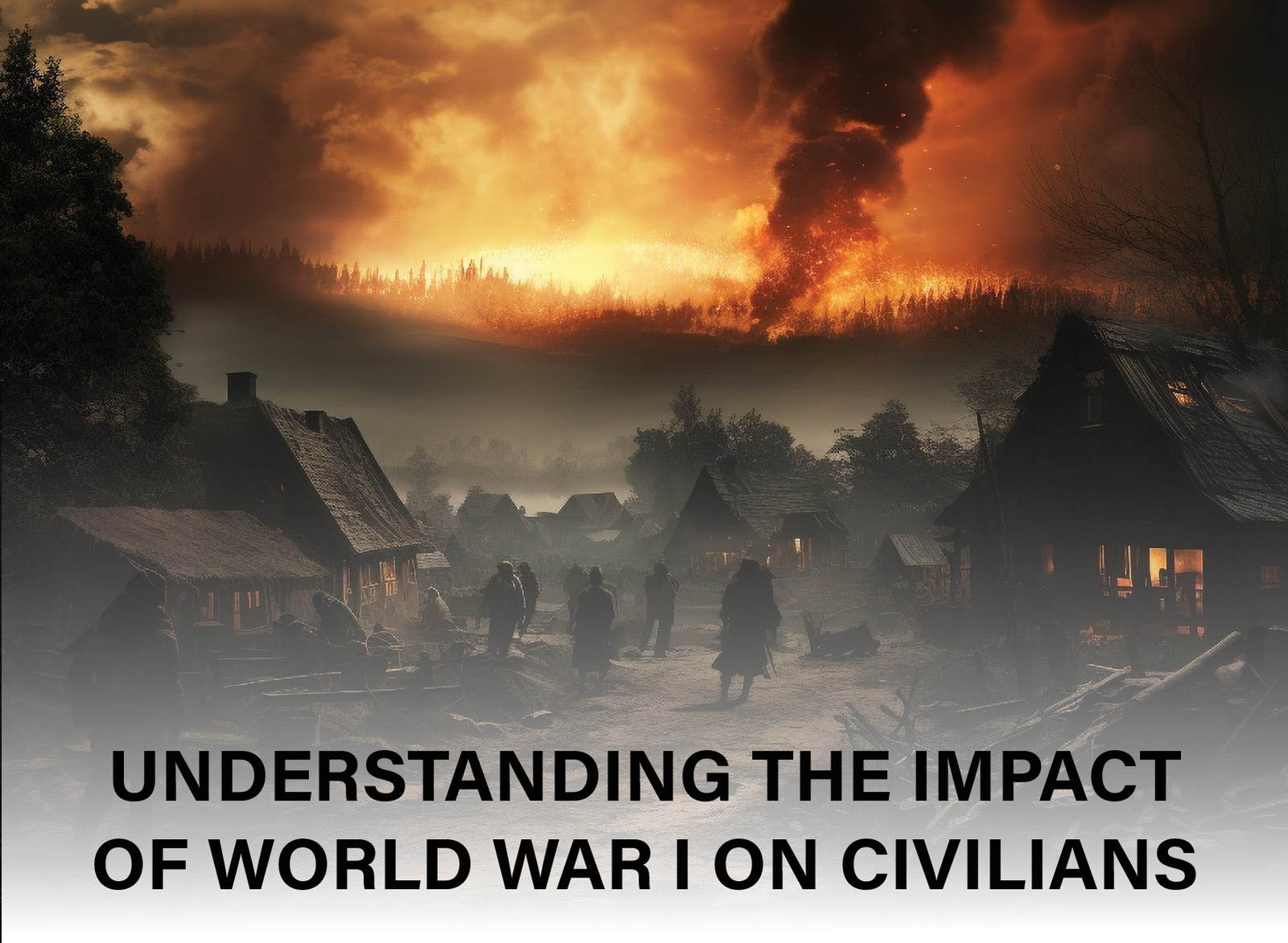
It was the most terrible war in the history of a man, and world war I (1914-1918) left its trace on people. With the invasion of the modern industrial warfare on both the battlefield and into the home front, the common folk were more and more getting involved in the conflict. Millions were displaced and families were left homeless and communities destroyed. There were food shortages that led to mass hunger and rations were the order of the day. Women and children had to go to work as men went to fight and this brought about a challenge in the social norms. Relatively common psychological trauma was caused by air raids, bombings, and the death of loved ones, which left scars that would never heal.
The health of the population was further harmed due to public health disasters such as the deadly influenza pandemic of 1918. The Impact of World War I civil liberties were affected when governments tightened control by use of propaganda, censorship and overly maxed rationing. All these factors made the political and social scene irreversible. It is important to know the Impact of World War I , which affected civilians in order to comprehend the reality of modern warfare and how people had to survive despite its outrages.
Displacement and Refugee Crises
Millions of civilians throughout Europe and into other countries were displaced due to the advance of armies during World War I. Towns and villages were shelled or taken over by other countries and the people had to leave their homes. The Civilian population also ran away taking with them only what they could carry on their backs resulting in huge numbers of refugees. There were unsanitary overcrowded camps which had inadequate food and shelter. There was separation of families and pervasive emotional trauma. The social and ecological Impact of World War I pushed the refugee crises to long-term consequences over 75-word contents in each of the H3 and 4 bullets per heading.
Mass Evacuations
People had to leave their homes just as armies advanced, having to leave behind property, their jobs and anything that they may have valued.
- Refugees went through tiring and insecure travel, sometimes walking long distances, and lack of food and to live in shelters throughout the journey.
- The transitional shelters and camps were overcrowded and under-resourced and unsafe to some people who are vulnerable, like children and the elderly.
- The cultural, social and economic costs were lost decades later due to communities not returning, thus resulting in permanent fragmentation.
Destruction of Property
Artillery fire and bombing destroyed whole towns and villages, some of which were inhabited by the towns and villages in combat zones.
- Houses, farms, and enterprises were demolished or deserted and families lost the means of income and survival.
- The war created a slow, costly, and unsustainable situation when shoving economies off already devastated regional economies.
- Scores of families were left poverty stricken having been unable to claim property which had been lost or to rebuild adding to their postwar misery.
Refugee Camps
Living in refugee camps was very dangerous as there was inadequate sanitation and shelter, and clean water.
- The overcrowding led to the propagation of disease and malnutrition especially in children and the aged.
- Humanitarian aid organizations found it difficult to provide food, clothing, and medicine that matched increasing demand.
- Numerous camps ended up being semi-permanent and left destitute families in abject poverty and misery over many years.
Family Separation
Families often get separated during evacuation and confusion thus each family member cannot find the other person.
- Millions of children were left parentless or lost their siblings and parents due to mass displacement activities.
- The reunification initiatives did not succeed because of records destruction, communication failures and shortage of resources.
- Emotional scars of these separations marked long term scars in future generations.
International Aid
Governments and charities organized the programs of relief, delivering food, shelter, and clothes to refugees.
- The distribution of aid was usually not even bringing some of the populations under-serviced and others were given more.
- The political and military interests played a role in determining who received priority in terms of assistance during the crisis.
- These responses became the basis of contemporary global humanitarian aid in the context of major catastrophes
Food Shortages and Rationing
Due to Impact of world war I, the food supply was disrupted terribly and much hunger was realized both in the cities and the countryside. Imports of necessities were stopped by the means of a naval blockade, and the agricultural output was devastated by warring farmers. To enable an equal distribution, the governments established the use of rationing, which was characterized by malnutrition. Food shortage contributed to political unrest and anger especially in occupied lands where food was appropriated by the occupying military. People were not allowed to buy food anymore, and civilians had to supply themselves with food through cultivation, and black markets became giant.
Blockades and Trade Disruption
Naval blockades imposed by the allies deprived the enemy states of much-needed imports such as food, fuel, and industrial supplies.
- Supply deficiencies made goods scarce and unaffordable with disastrous consequences on civilians both in cities and villages.
- Economies and the extreme hunger that faced occupied territories developed as resources became scarce.
- Such blockades enhanced this resentment and decreased hope, thus the survival of civilians was a big strain on governments.
Decline in Agriculture
One of the major Impact of World War I is the drafting of the farmers had was on the crops that were left uncared, resulting in drastic fall in the production in the agricultural sector.
- Necessary tools and machines, as well as livestock were redirected to military needs, increasing the losses in production.
- During the war, more towns and villages had worsening food shortage and this posed a risk of famine.
- The disruption of rural economies wrought havoc on communities dependent on farm labor and resources, including those that produce food and materials.
Rationing Systems
To make available resources to the citizens more equally, governments came up with rationing programs.
- There were long lines waiting to get small portions of food and users were even more frustrated given their poor conditions.
- Black markets flourished because citizens were willing to use illegal means to bypass tough rationing regulations.
- Enforcement of complaints with rations increased tension between the citizens and the government.
Malnutrition
Malnutrition lead to weak immune systems making people susceptible to diseases such as influenza and tuberculosis.
- The worst victims were children who were affected with stunted growth as well as chronic diseases whose mortality rate was also so high.
- People in cities and the countryside experienced food shortages as imports and outputs declined.
- Hunger undermined the confidence in both government and states, leading to a rise in anger, demonstrations, and social upheavals throughout societies.
Victory Gardens
The civilians had to cultivate vegetables and herbs in yards, parks, and communal areas.
- These Victory Gardens also lessened reliance on government food stocks that were overworked and rations.
- Societies adopted the initiative and this created a morale in the communities which enhanced local food security.
- The project assisted towards stabilizing supply chains and mobilizing the population through co-routing of the civilian population during warfare activities.
Economic Hardship and Labor Changes
The Impact of World War I on Id The economic impact of World War I was catastrophic to civilians. Prices increased as a result of inflation and many people could not afford basic needs. With millions of men in the trenches, more women than ever, teenagers and even children worked. There was a shift in factories to make military products and it caused a shortage in consumer goods. Reparations and war debts also weighed heavily on national economies, and the effects of World War I took decades to catch up with the civilian populations once the war ended.
Inflation
The cost of food, clothes and other necessities became very high and the civilians could hardly afford these basic necessities during the war.
- Savings in households were soon exhausted, and inflated prices in a stagnant labour market meant that many people were now struggling to meet their basic needs.
- The economic turmoil led to elevated poverty and acts of resentment among the citizens particularly the one tallied to the working classes who were the worst hit.
- The cost of inflation damaged morale at the home front which caused long term hardships that would persist even after the end of the war.
Women in the Workforce
They have taken over positions left by men working in factories, on the transport and also clerical jobs that are needed in the war.
- Their rising number questioned gender roles that had existed since time immemorial and they shifted the opinions that people had regarding the ability of women in the labor force.
- These contributions maintained a sustainable output of supplies and services as the men were at the front lines fighting.
- The contribution of women during wartime reinforced the reason behind the postwar suffrage campaigns that saw many countries progress politically and socially.
Child Labor
Due to economic hardship, many kids had to get into the workforce to support their families at the expense of education.
- The working conditions were unsafe and paid less and the workers were not only being exploited physically but emotionally as well.
- This increase in child labor caused educational deficits over the long term, which damaged the future prospects and social mobility.
- During the war, children were used and this enhanced inequalities and resulted to generation scars that could not be healed even after the war.
Industrial Focus
Factories began to produce mostly weapons, munitions and other supplies of the military forcing the civilian industry to suffer.
- Common items such as clothes and equipment became rare as all the resources were diverted fully to the war.
- Civilians were frustrated due to shortages of basic needs and this interfered with ordinary life in the town and in rural settlements.
- Industrial production was strictly controlled by governments and supply became further restricted to civilians as well as adding to the growing grunts back at home.
Postwar Debt
The purpose of the loaning took a colossal account as countries borrowed to fund the war, and the economy was left with years of debts.
- The defeated nations were left with debilitating reparation packages that, on the one hand, did not allow any recovery but, on the other hand, led to decades of despair in the economic sense.
- There was a form of political unrest which was a result of economic instability in the debt ridden countries and the radical movements gained popularity.
- The population took a hit on the repayment in the form of increased taxes and decreased services, which contributed to lessening public tolerance.
Psychological and Social Impacts
The psychological trauma induced by the war resulted in scarring to civilian populations. Civil life was riddled with fear of bombs and air raids as well as mourning family and loved ones that are gone. There was a change in social structures because women became independent and their roles changed. Propaganda battles also heightened patriotism as well as suspicion of the minorities and perceived enemies of the country. Impact of world war I left a profound mark on the psychological state of the civilians, which long influenced societies even when the combat had declined.
Fear of Air Raids
The warfare in the cities began due to airplanes and zeppelins as never before in the history of the world, people were directly targeted in their own cities by a weapon of war.
- The uncertainty of having surprise bombings that interfered with routines and left families living under perpetuated anxiety and without a promise of security at home.
- The governments established shelters, alarms and blackouts as a way to minimize the casualties, but none of these plans calmed the mass hysterics.
- Cities had sinking spirits since social equilibrium was threatened, because school, work, and social life were constantly disrupted during the air raid alerts.
Grief and Loss
Millions of families mourned lost their soldiers and several towns saw whole generations of men that are essential to their future gone.
- Memorials and commemorative events gained popularity because people needed to remember loved ones and way to cope with shared grief.
- This caused social instability and trauma as familial and economic structures were broken, without any male population to replace them.
- This great sorrow was commemorated in literature, art and culture of the times, and left an indelible mark on the memory of the postwar society of sacrifice and tragedy.
Gender Roles
Men left the traditional workplace to serve in battles and women entered the workplace to sustain the war at home, which saw them occupy key positions in the factory, hospital, and office setting and disregard traditional roles.
- The greater independent outlook of the war undermined existing expectations in society concerning their role and abilities to participate in the world.
- These developments led to more powerful efforts towards political equivalence, such as suffrage efforts in several countries in search of timeless change.
- The new gender relations presented new challenges to postwar societies that were situated into the need of fitting in new gender roles, not to mention the inclusion of returned veterans who wanted to resume their former postbellum life.
Propaganda
The posters, newspapers and even films helped to propagate patriotism and keep the morale of the people up during the war and governments depended a great deal on it.
- Themes of enlistment and sacrifice were promoted through messages that framed the war as a great cause that must be fought to save the nation.
- Enemy nations and minority groups were vilified through propaganda as dangerous to unity and could be discriminated against.
- Opposing thinking was simply suppressed by censorship so that the civilians never knew about the extent of devastation on the battle line.
Distrust of Minorities
The minority groups were subjected to more vehemence by mainstream populations as they were blamed to exist as scapegoats to the war consequences and shortcomings.
- Discrimination turned into violence which lost community trust and caused divisions that would last long even after the war was done.
- Those deemed to be an enemy alien would be usually deported to camps, whether or not that individual was a citizen of the country that they were in or whether they were disloyal or not.
- These segregationist policies destroyed societal stability and created permanent scarrings on multicultural society.
Public Health Challenges
People were exposed to serious health disasters during and after the war time of World War I. The results were disease outbreaks caused by unhealthy living conditions in overcrowded refugee camps, dangerous sanitation cases and malnutrition. The 1918 influenza epidemic took out human populations already worn down by years of suffering. Medical institutions were stretched to the breaking point even trying to address the needs of soldiers and civilians alike, and chronic ailments became endemic.
Disease in Camps
Inadequate shelter in refugee camps was overcrowded and unsanitary taking into consideration that it became a breeding ground to cholera, dysentery and other killer diseases.
- Sanitation was very bad and since clean water was limited, illness easily spread among the displaced at a very high rate.
- The amount of medical personnel and medicine could not cope with the situation, which made many civilians not get treatment, and further deteriorated the weak conditions within the camps.
- The most vulnerable demographics, including children and the elderly, were hit the hardest, and mortality rates increased as epidemics became uncontrollable.
1918 Influenza Pandemic
The 1918 influenza pandemic wiped out millions in every quarter across the world, and it was killing the already malnourished populations that were further worn out in the war years.
- Countries introduced quarantines, quarantine of schools and prohibitions of gatherings, however, the virus spread quickly within communities and hospitals.
- The number of infected and sick civilian populations stalled medical systems with a small capacity to take care of all.
- The end of the war was destined to go unpremeditated behind the pandemic, which left scars on both the survivors and nations.
Malnutrition-Related Illness
There was mass malnutrition due to lack of food, which compromised the immunity system of people and exposed them to chronic diseases and infections.
- During the war, lack of vital nutrients gave rise to extreme health issues such as rickets, and stunted growth in children.
- There were more extended illnesses due to lack of proper diets and the sickness took a long time to heal and this contributed to the casualties that the civilian population sustained.
- These shortages had lasting scars on whole generations, and the process of restoring health and stability in the wake of the conflict was already extending.
Strain on Medical Systems
Hospitals could not cope with the victims as well as wounded military members with the result that critical cases were left unattended due to inadequate capacity.
- Lack of those who get medical care deteriorates the quality of the received medical care significantly. This lack concerned doctors, nurses, and even medicines.
- The military requirements had to be given priority at the expense of the rest and this meant that civilians had to endure neglect in terms of disease and injuries going unchecked for a period of months.
- Such a collapse demonstrated the weaknesses of healthcare during wartime, which increased the death rates and population suffering.
Long-Term Effects
The adverse conditions during the war and lack of treatment of diseases also go along with the survivors of the war to be carried on with lifelong physical disabilities and chronic diseases.
- The standard mental health issues such as depression, grief, and trauma were prevalent, which made communities fractured years after the war.
- The economic and social reconstruction process was halted, as whole communities experienced a lack of healthy and able-bodied workers and leaders.
- Such misfortunes influenced governments to invest in improving and enhancing their public health systems and preventive care in order to discourage such disasters in the future.
Conclusion:
Very deep wounds went into civilian life due to the Impact of World War I – food shortages, malnutrition, air attacks, the displacement of populations, ruined economies, rationing and massive refugee crises defined daily life. Women were able to enter occupations they were never allowed before, social rules changed, minorities and children were heavily taxed and suffering was exacerbated by the influenza in 1918. Despite small positives such as Victory Gardens, charitable support, the human, family and financial costs were enormous, with political effects that lingered for decades. Civilian experiences reveal the enduring Impact of World War I, depicting how war stretched well beyond the battlefield in the lives of ordinary people, and why learning these lessons and continuing to teach them through education, museums, and policies that safeguard civilians in wars today is vital to creating a more humane future.
FAQs
1- What role did blockades play in the lives of civilians in World War I?
Importation of basic necessities was disrupted by blockades and a shortage of food at the cost of economic destruction and increased death rates among citizens.
2- What was the role of women during World War I?
The fight to break the gender stereotypes saw women filling jobs in factories, transport, and offices and gaining support on their demand to be allowed to vote.
3- What were the reasons to have rationing systems?
Distribution of essential goods such as food and fuel became a problem and there were fair distributions through rationing as the production and imports crashed.
4- What did the influenza pandemic of 1918 do to the civilians?
Millions of people died as a result of the flu that already overburdened medical services that were already overworked under the influence of war and were particularly affected in war-ravaged malnourished populations.
5- What were the effects of the war on children?
Lots of children were malnourished, and in risky professions or they lost parents which affected their health and educational progress.
6- Did people deliberately target civilians during the war?
Yes, direct attacks on civilians were quite possible, as air raids and scorched earth policies were used.

Analyzing the Post-WWI Peace Settlements

How to Explore the Treaties of World War I That Ended

Understanding the Impact of World War I on Civilians

The Role of Technology in World War I Warfare

Tips for Studying the Alliances in World War I

Key Battles of World War I and Their Significance

Studying the Military Leaders of World War I

How World War I Changed Global Politics

How to Analyze the Trench Warfare of WWI

Understanding the Causes of World War I

Key Historical Battles That Shaped World History

How to Understand the Evolution of Military Strategies

Best Books for Learning About the History of Warfare

How to Study the Impact of War on Society

How to Study The History of Global Conflicts

Best Resources For Learning Military History

How to Analyze Historical Battles And Tactics

Effective Ways to Study the History of War

Key Moments in The History of Armed Conflict

Tips For Understanding The Causes of Wars
How to Analyze Historical Battles And Tactics
Tips For Understanding The Causes of Wars
Best Resources For Learning Military History
Best Books for Learning About the History of Warfare
How to Study the Impact of War on Society
Understanding the Causes of World War I
How to Understand the Evolution of Military Strategies
How to Study The History of Global Conflicts
Key Moments in The History of Armed Conflict
Analyzing the Post-WWI Peace Settlements
Effective Ways to Study the History of War
Tips for Studying the Alliances in World War I
Understanding the Impact of World War I on Civilians
Studying the Military Leaders of World War I
How to Explore the Treaties of World War I That Ended
The Role of Technology in World War I Warfare
How World War I Changed Global Politics
Key Battles of World War I and Their Significance
Key Historical Battles That Shaped World History
How to Analyze the Trench Warfare of WWI
Analyzing the Post-WWI Peace Settlements
How to Explore the Treaties of World War I That Ended
Understanding the Impact of World War I on Civilians
The Role of Technology in World War I Warfare
Tips for Studying the Alliances in World War I
Key Battles of World War I and Their Significance
Studying the Military Leaders of World War I
How World War I Changed Global Politics
How to Analyze the Trench Warfare of WWI
Understanding the Causes of World War I
Key Historical Battles That Shaped World History
How to Understand the Evolution of Military Strategies
Best Books for Learning About the History of Warfare
How to Study the Impact of War on Society
How to Study The History of Global Conflicts
Best Resources For Learning Military History
How to Analyze Historical Battles And Tactics
Effective Ways to Study the History of War
Key Moments in The History of Armed Conflict
Tips For Understanding The Causes of Wars
-
 General War History Tips10 months ago
How to Analyze Historical Battles And Tactics
-
 General War History Tips10 months ago
Tips For Understanding The Causes of Wars
-
 General War History Tips10 months ago
Best Resources For Learning Military History
-
 General War History Tips7 months ago
Best Books for Learning About the History of Warfare
-
 General War History Tips10 months ago
How to Study the Impact of War on Society
-
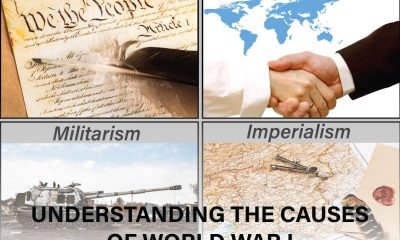 World War I Tips6 months ago
Understanding the Causes of World War I
-
 General War History Tips7 months ago
How to Understand the Evolution of Military Strategies
-
 General War History Tips10 months ago
How to Study The History of Global Conflicts


